Primary Program
Accepting applications for 2026-27.
The Primary Approach
The primary program is for students who are three years old by September 1. Three-year-olds are introduced to the Handwriting Without Tears Program. This play-based, multi-sensory writing and literacy program builds foundational skills for learning in all areas.
The 3-year old program is also about developing empathy and social skills. Our Conscious Discipline approach in the classroom provides each child with the skills needed to manage emotions, relate to others, and to be part of a school family.
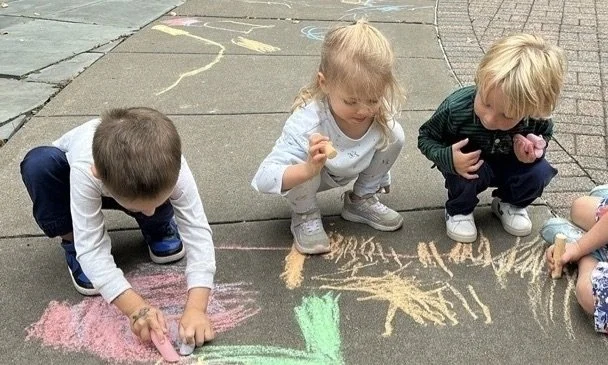
During free play periods, the teachers provide enough structure to encourage the children to play together in smaller groups: two children might be constructing and playing with a train set; another three might be engaged in housekeeping, while two more might be coloring. These smaller groups are easily manageable for our students and they help the children succeed as they navigate many relationships.
Motor Growth
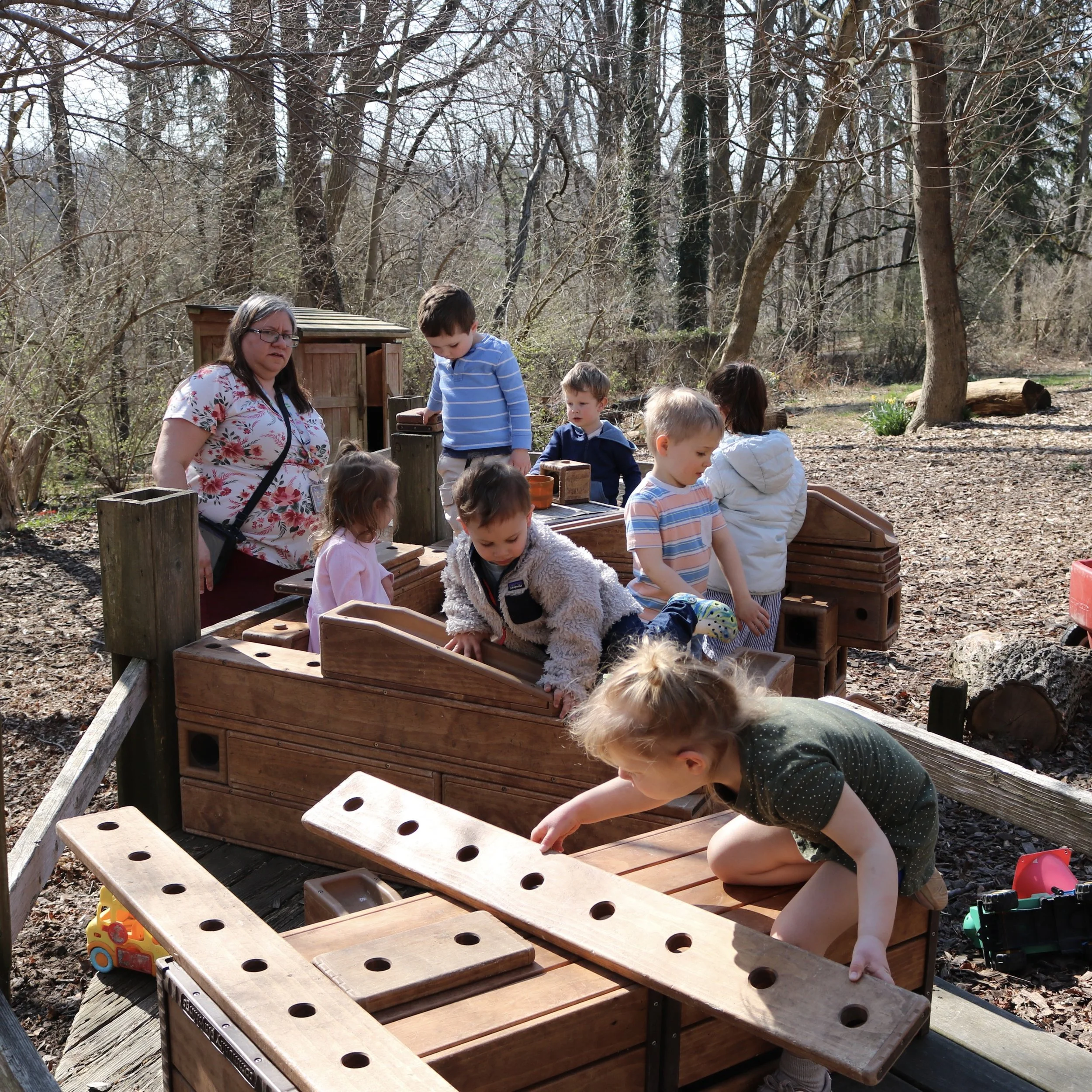
Research shows that preschool students need opportunities to play vigorously! As young children get older, their physical skills continue to develop steadily. They can coordinate their large muscles more easily. Suddenly they are able to easily run, jump, climb, skip, hop, throw and kick a ball, and ride a tricycle! They are stronger now. The excitement surrounding this new strength and coordination pushes our preschool students to take new risks, run a little faster, and reach a little further. Simply put, our students thrive on physical activity.
As our students progress from the beginner program, to the nursery program, and up into the primary and pre K program they have increased hand-eye coordination. This enables them to cut with scissors, draw shapes, stack smaller objects, and use zippers and buttons! Overall our preschoolers take pleasure and pride in the use of their bodies, which work much better than when they were toddlers!
Curriculum
Physical Development & Health
Through an abundance of outdoor time and P.E. classes students have time to run, climb, jump, kick, throw, roll, and laugh their way to building strength stamina, hand-eye coordination, and awareness of their body in space. Students also have daily practice using a varieties of tools (pencils, markers, scissors, tweezers, etc.) to develop strength and small-motor control. Students learn daily hygiene routines, learning about healthy eating, and learn about taking safe risks.
Literacy & Language Development
Develop listening comprehension
Develop concept of book
Respond to questions
Explore different type of literature
Rhyme
Read Environmental Print
Recognize and trace upper case letters
Practice writing to share experiences
Develop fine motor skills needed for writing
Write name
Communicate so they will be understood by peers and adults
Use facial expressions, volume, and tone appropriate for the situation
Increase vocabulary
Math
Awareness of quantity
Recognize numbers
Determine quantity/understand one-to-one correspondence
Use ordinal numbers
Science
Students ask questions, collect data, record observations, create hypothesis, and adjust their thinking while exploring several themes including (but no limited to)":
Human impact on the environment
Plants
Seasons
Land forms
Bodies of water
Properties of earth’s materials
Living and non-living things
Birds
Animals and habitats
Machines
Technology
Structures
Social Studies
Our students spend time building community and an awareness and respect for differences in people and cultures. Daily themes explored include:
Family
Differences
Sense of geography
Members of a community
Social & Emotional Development
With the help of the Conscious Discipline program our students:
Recognize that feelings are separate fron actions
Follow simple rules
Understand natural consequences
Develop awareness of others’ perspectives
Develop positive social skills
Develop turn taking
Develop negotiation skills
Creative Expression
Students are provided daily opportunities to express themselves and expeience different creative outlets. In addition to integration of the arts into their everyday activities, children have the following scheduled classes:
Music
Art
Theater
Religious & Spiritual Development
Students meet weekly with Christ Church Christiana Hundred’s rector, associate rector, and religious education teacher for Chapel and Godly play. Children are taught simple songs to say grace before eating. We regularly teach and discuss the values of kindness, inclusivity and gratitude.
Daily Schedule
8:30-9:30
Drop Off/ Outdoor Free Choice: Dramatic Play, Construction/Blocks, Creative Arts, Manipulative/Mathematics, Language and Literacy, Multi-Sensory Play
9:30-10:00
Cooking and Food Exploration; Snack and Story Time
10:00-10:30
Circle Time: Greeting our friends, wish you well board, calendar, weather, discuss monthly theme, language development
10:30-11:00
11:00-11:30
Outdoor play, nature investigation, and science exploration
11:30-12:00
Lunch/Healthy Eating Habits
12:00-12:30
Half Day Pick Up/ Free Choice: Dramatic Play, Construction/Blocks, Creative Arts, Manipulative/Mathematics, Language and Literacy, Multi-Sensory Play
12:30-1:30
Quiet Rest Time
1:30-2:00
Snack and Chat
2:00-2:30
Afternoon Specials (Athletic, Theater)
2:30-3:30
Outdoor play, nature investigation, and science exploration
PROGRAM OPTIONS
5 Days Per Week
Half Day: 8:30-12:30 (morning snack and lunch included)
2 Half Days (Monday and Friday) and 3 Full Days (Tuesday-Thursday)
Full Day: 8:30-3:30 (morning snack, lunch, and afternoon snack included)
Early care and after care are also options.